2027 Arctic Hare Calendars – Snowy Hares of the Frozen North
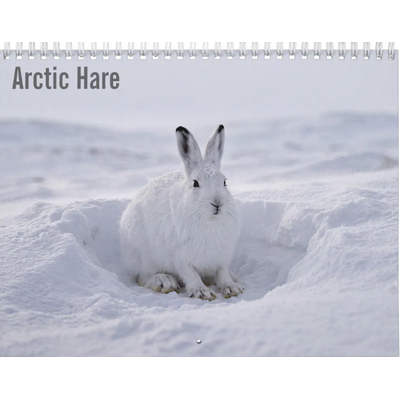
Discover one of the Arctic's remarkable cold-weather survivors with our collection of Arctic Hare Calendars. Featuring snowy white coats, powerful hind legs, frozen tundra, and dramatic northern landscapes, these calendars showcase Arctic hares in their beautiful natural habitat.
Read More
Arctic hares are specially adapted for life in regions where temperatures can plunge far below freezing. Their thick fur provides insulation, while their compact ears and powerful bodies help them cope with harsh Arctic conditions. Against snow-covered landscapes, their pale winter coats provide especially striking wildlife photographs.
Perfect for wildlife enthusiasts, rabbit and hare lovers, and anyone fascinated by the frozen North, Arctic Hare Calendars combine beautiful animals with spectacular tundra and winter scenery.
Explore 2027 Arctic Hares Calendars


Did You Know?
- Arctic hares have thick fur and heavily furred feet that help protect them from the extreme cold of the Arctic tundra.
- Their powerful hind legs allow them to move quickly across snow and rocky terrain when escaping predators.
- Although Arctic hares are often seen alone, they can sometimes gather in surprisingly large groups, especially while feeding.
❄️ Explore More Arctic & Small Animal Calendars



About Arctic Hares
About Arctic Hares
Arctic hares are large hares adapted to the cold environments of the northern tundra. They are found in Arctic regions of North America and Greenland, where their thick fur, compact ears, and heavily furred feet help protect them from extreme temperatures and snowy conditions.
Their powerful hind legs allow Arctic hares to move quickly across snow and rocky terrain. They feed primarily on woody plants, grasses, leaves, buds, and other vegetation available in the tundra. Although they may be seen alone, Arctic hares can sometimes gather in surprisingly large groups.
Arctic hares are famous for their white winter coats, which provide camouflage against snowy surroundings. In some parts of their range, their coats become grayer or brownish during warmer months. Their impressive cold-weather adaptations and striking appearance against vast Arctic landscapes make them memorable subjects for wildlife photography.